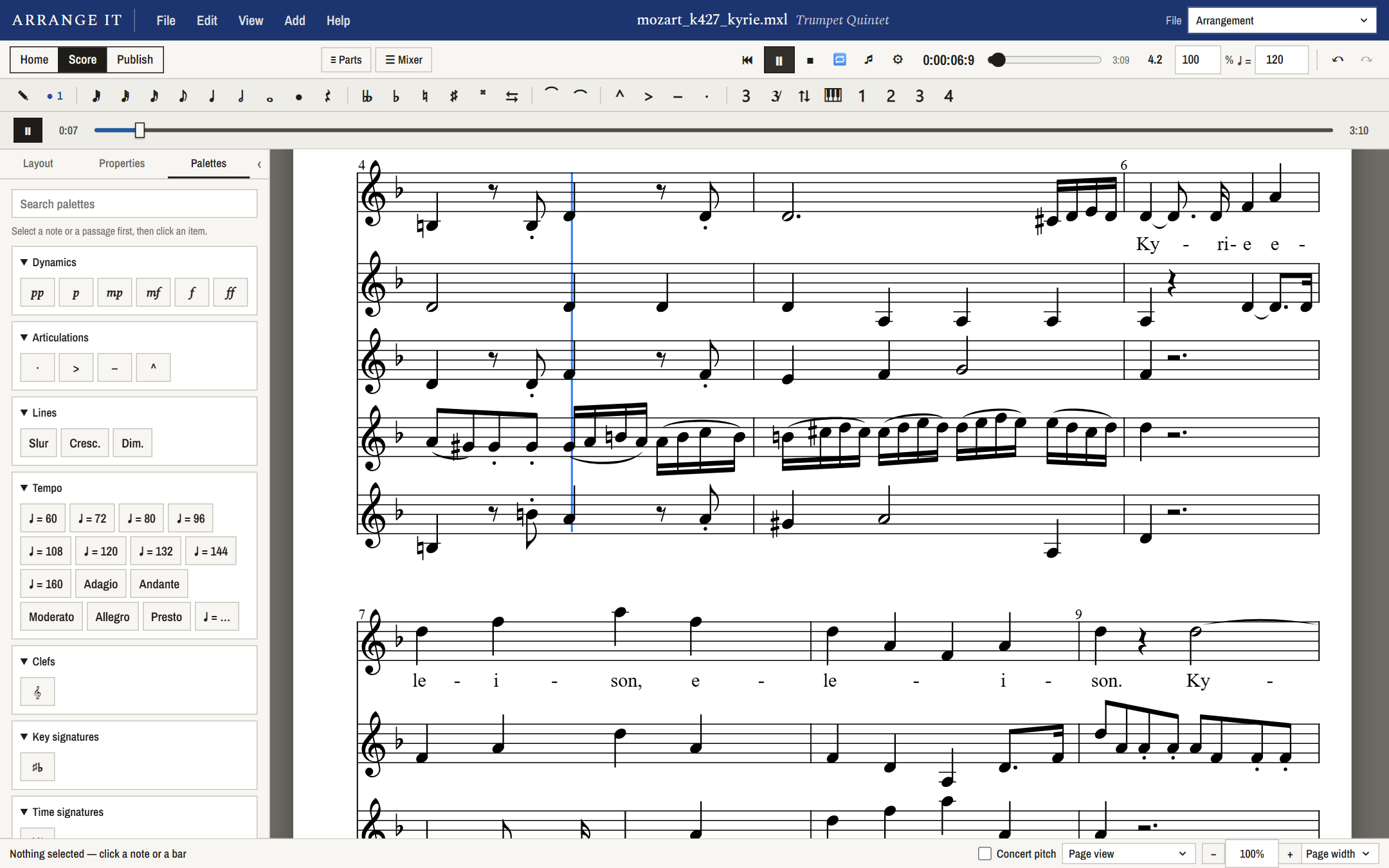
Twenty staves in. Five trumpets out.
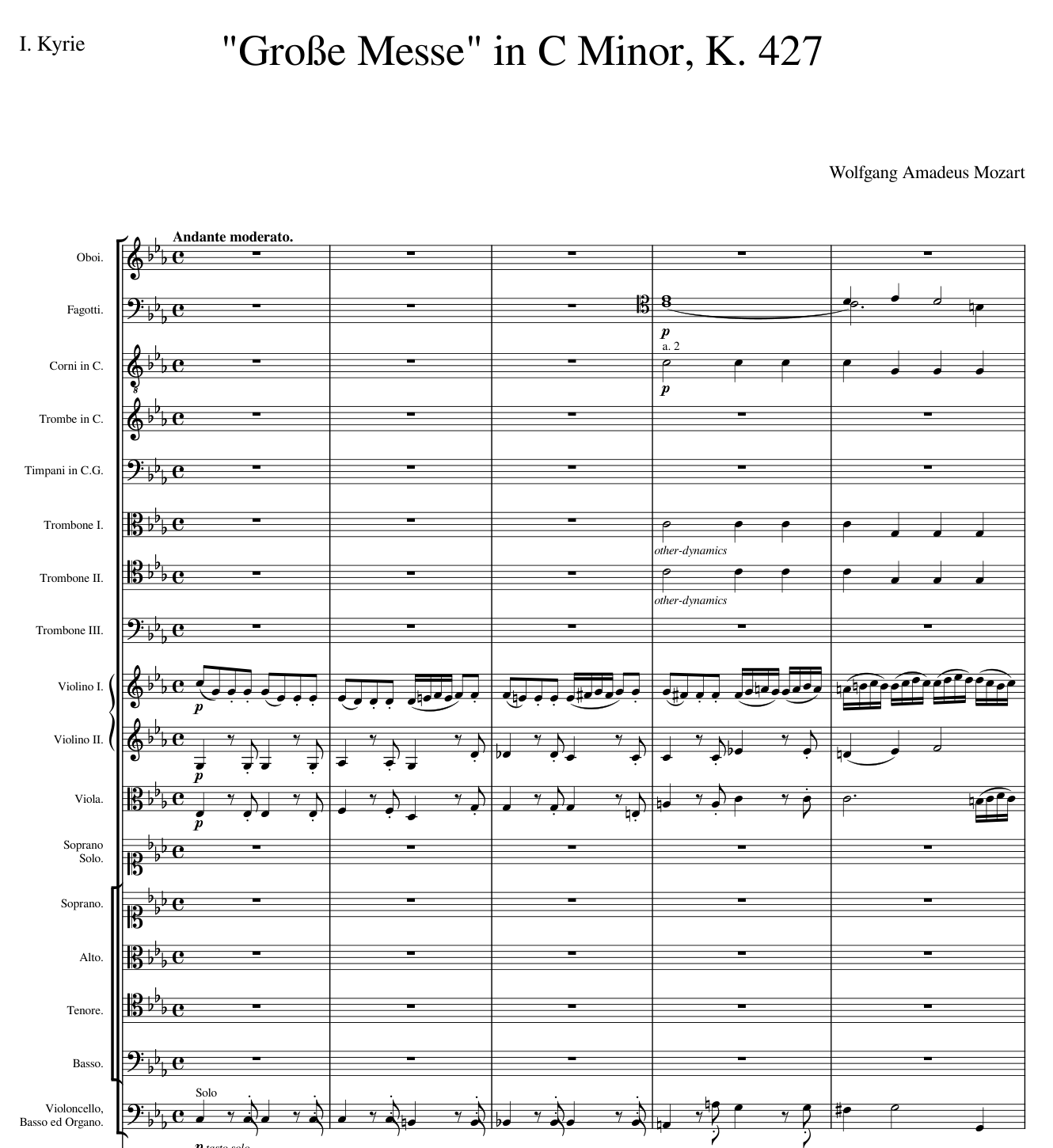
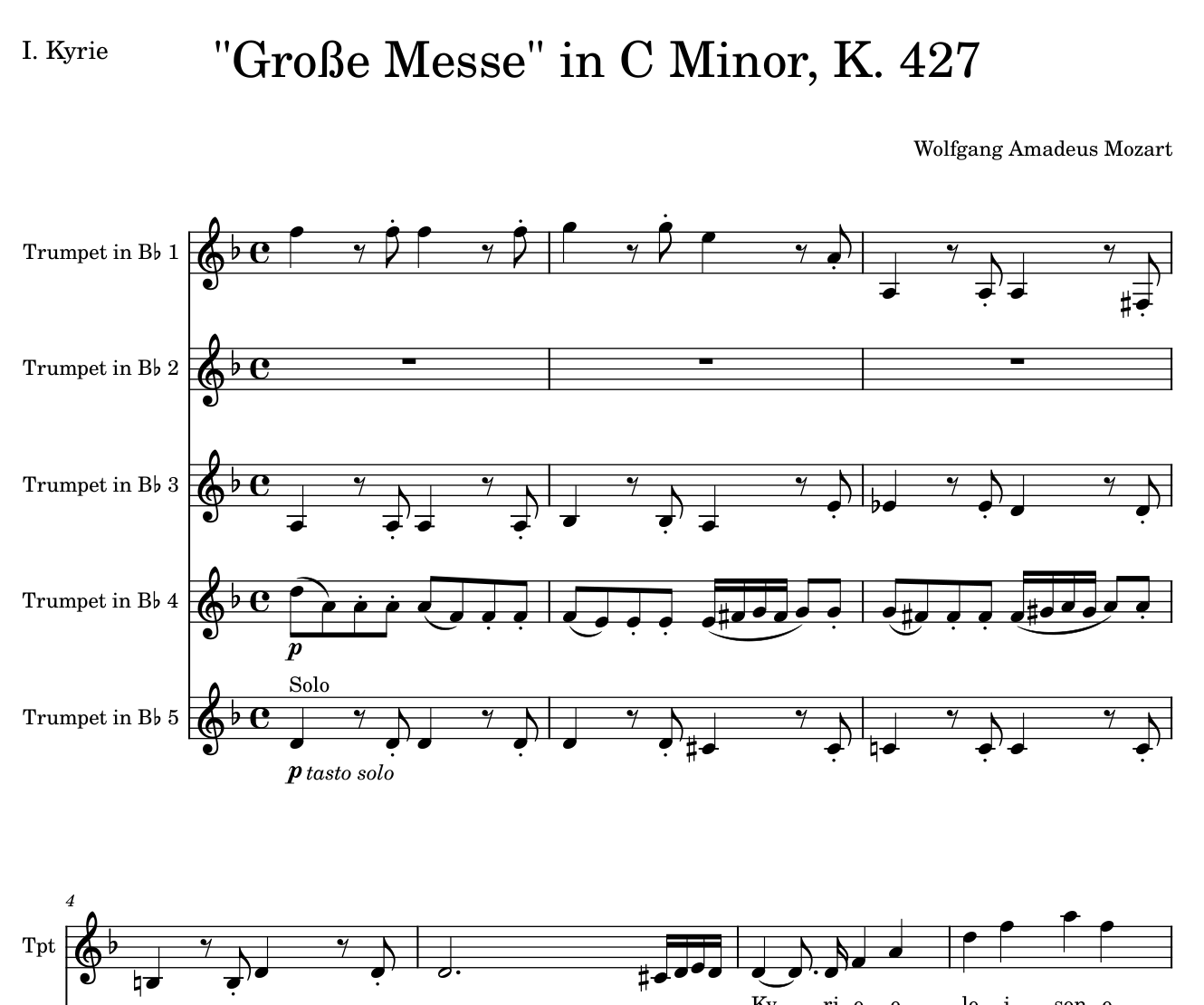
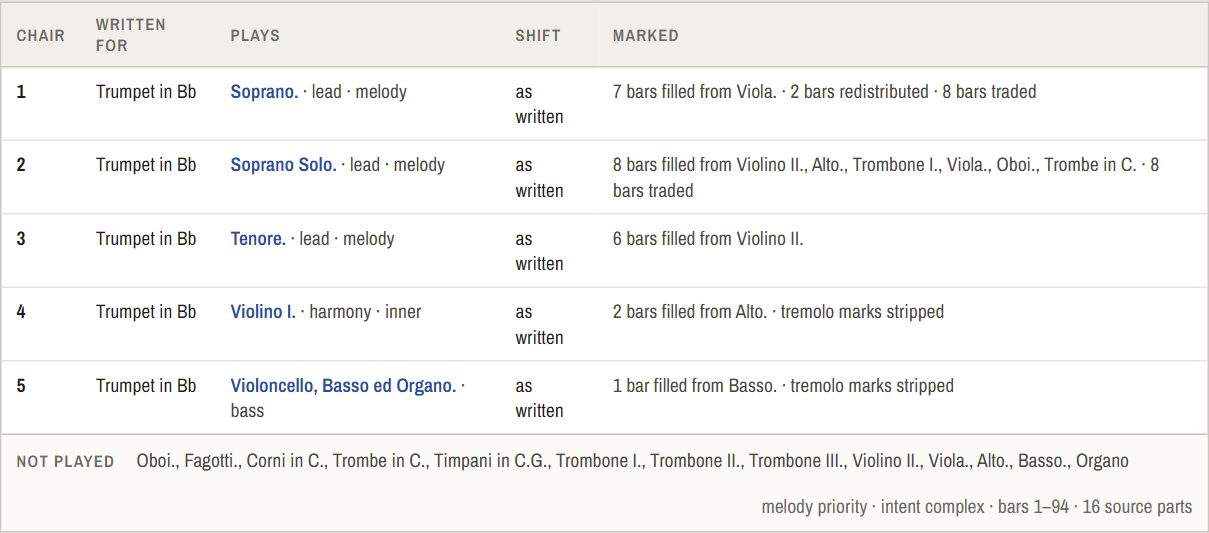
Mozart's Kyrie, K. 427, as engraved, and the same page after Arrange It seated it on a trumpet quintet. The three vocal lines, the first violins and the continuo bass each took a chair, the other parts fill their rests, and everything left out is listed.
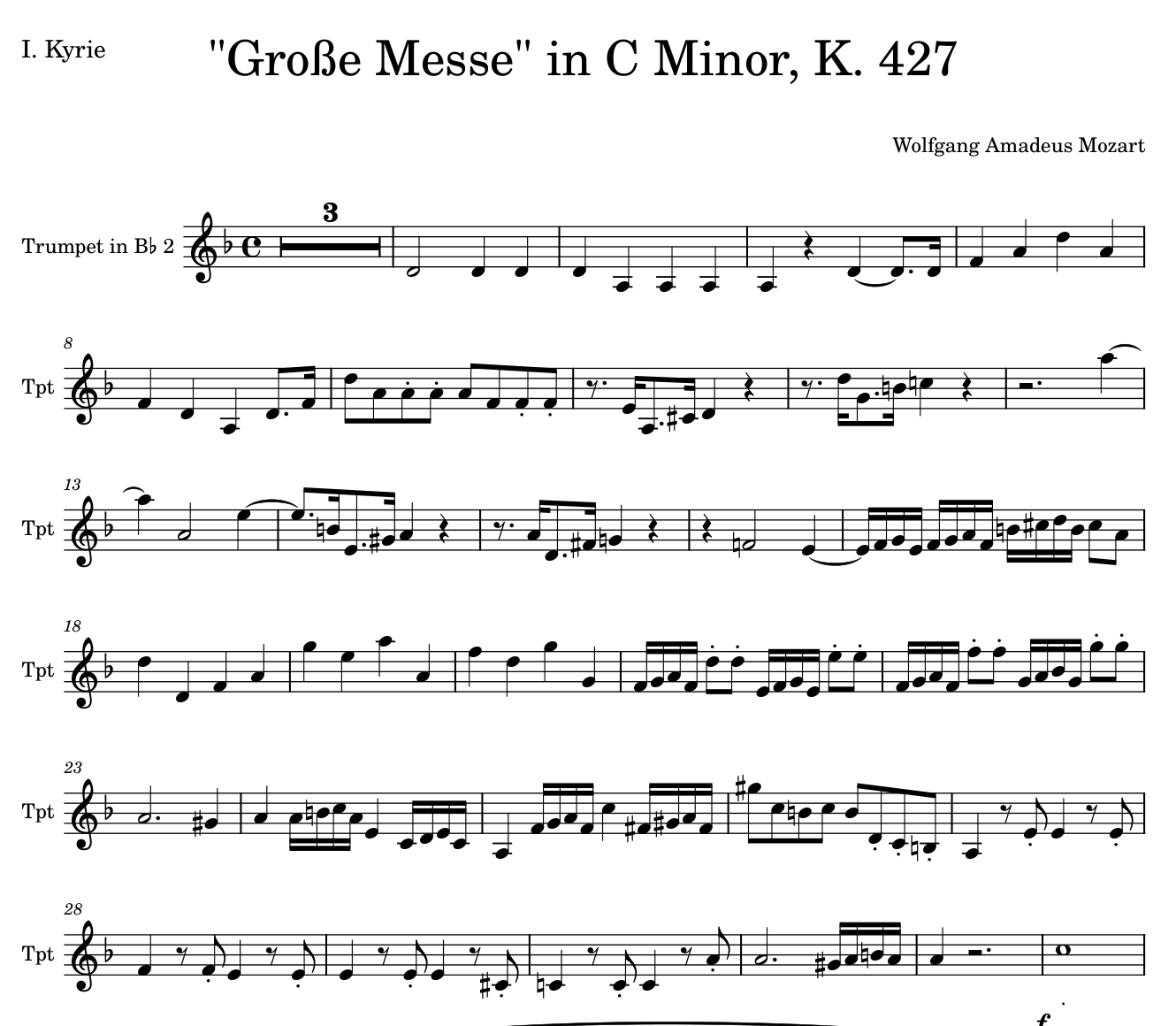
You get the seating plan, not a black box.
Every arrangement opens on its sheet: which source part each chair plays, in which role, what was filled from where, and every part the arrangement leaves out.
What it will not do.
Never invents a note. Fills come from the parts it did not seat, whole phrases at a time.
Never chops a line between chairs. A phrase moves whole or stays.
Never writes past an instrument's range, below a trumpet's valve floor, or a string tremolo on a wind part.
Never drops a part silently. Thirteen rules check the result against the source before you see it.
Fifty-three presets, or name the chairs yourself.
Brass
Woodwind
Strings
Band
Voices
Piano and chamber
Custom
Finish it here.
The editor is built to MuseScore Studio's functions on an existing score. You should never need a second program.
Passages first
Select bars and move them to another chair, swap two chairs, shift an octave, silence them or restore the source. The edits arrangers actually make.
Then the notes
Pitch, duration, ties, slurs, articulations, dynamics, tuplets, voices, signatures, clefs, repeats, text. Note input from the keyboard.
Hear it
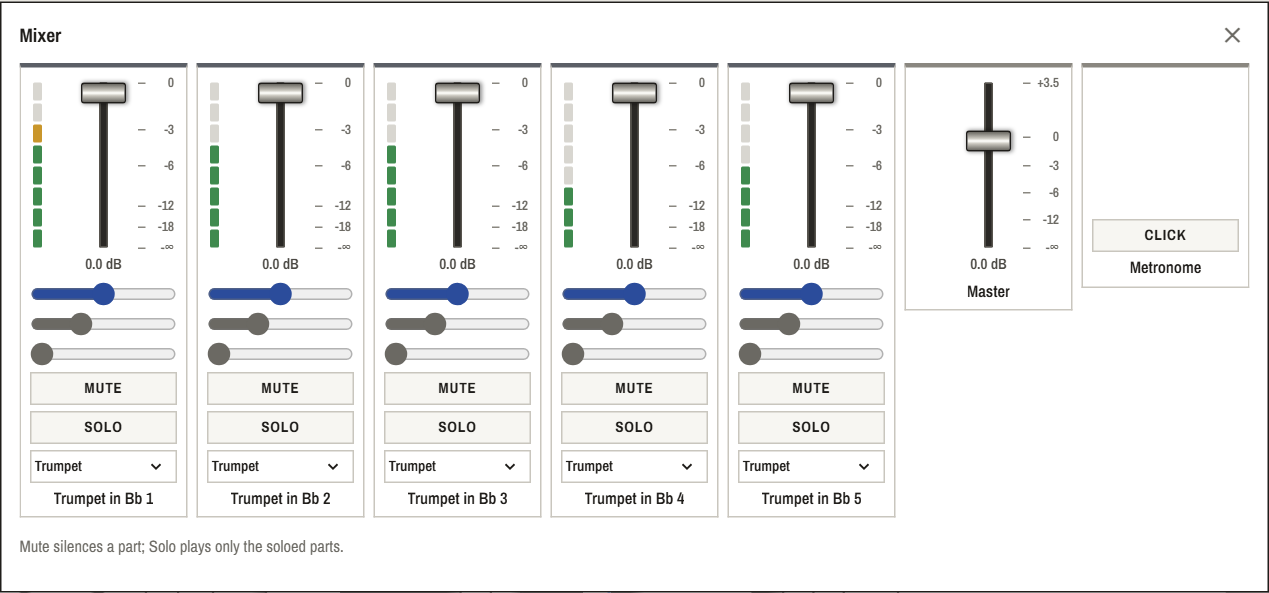
Real instrument sounds, a cursor that stays in time, tempo, loop, count-in, a metronome, and a mixing board per part.
Print it
The score, one PDF per part, a parts booklet, large-print staff sizes. Export MusicXML, MuseScore, MIDI and audio.
Whatever the score is in.
MusicXML and .mxl
Read directly. Credits and page layout are kept.
MuseScore files
Converted on the server. Nothing to install.
MIDI
Parts and instruments recovered. A multi-piece file becomes one arrangement per piece.
PDF from notation software
Read note for note from the engraving itself, lyrics included. Finale, Sibelius and MuseScore exports.
Scanned PDF or photo beta
Optical recognition, a panel to correct what the scan got wrong, then arranged like any score.
Audio beta
Pitch detection into a score you review first. Produced recordings are separated into stems.
Built by a trumpet player. Taught by his corrections.
The engine is calibrated against a corpus of arrangements corrected by ear in rehearsal, and every change to it is measured against them before it ships. It is licensed to organisations rather than sold by subscription: a school, a publisher, a band, a church, a library.